

Article summary
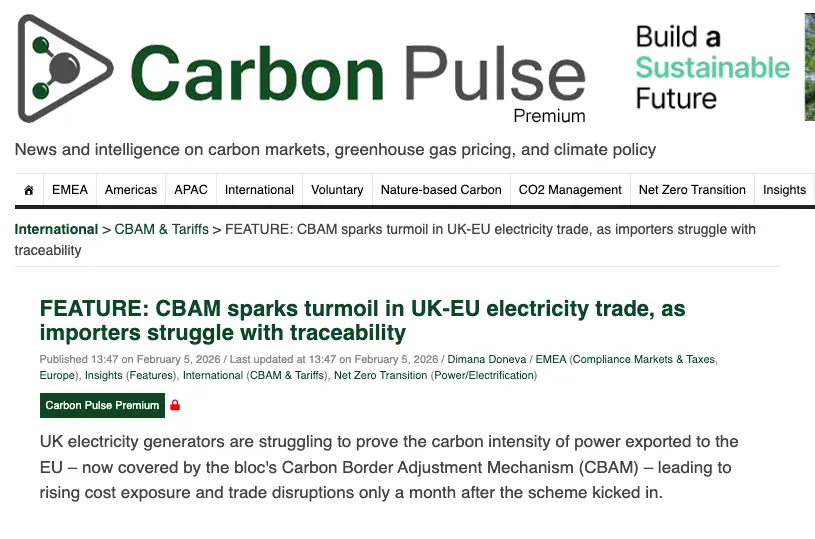
In a feature by Dimana Doneva, the introduction of the EU’s Carbon Border Adjustment Mechanism (CBAM) for electricity imports is examined through the lens of traceability and emissions evidence in UK–EU power trading. While the policy allows importers to use actual emissions data, many currently rely on default values based on historical grid averages, which often do not reflect today’s electricity systems.
JP Cerda, CEO of Renewabl, explains that this is particularly relevant for the UK, which closed its last coal plant in 2024. Despite this progress, default emissions factors can still inflate CBAM exposure when actual data is not available or cannot be verified under the rules. Cerda notes that, so far, the main impact has been on pricing certainty and how carbon intensity is evidenced, rather than on trade volumes themselves, highlighting the importance of improving how emissions data is demonstrated.
The article also points to a growing focus on hourly, asset-level data as companies look to better evidence the origin and emissions profile of their electricity. While practical barriers remain — including data availability and verification across borders — proposed EU simplifications could help make compliance more achievable over time. Cerda adds that clearer, more granular data will be increasingly important not only for CBAM, but also as expectations around Scope 2 reporting continue to evolve.
Full article on Carbon Pulse
Read the full feature with Carbon Pulse account.
.webp)

