Carolyn Addy, Renewabl’s Head of Commercial, spent two days at a data centre energy and sustainability summit in London. Here’s what stood out, focused on the parts closest to her work: procurement, energy data and reporting.
At the end of April I spent two days at a data centre energy and sustainability summit in London (29–30 April 2026, link). I work with data centre operators on renewable energy procurement, PPA tendering and reporting, so I went for the wider picture: how operators, developers and sustainability leads talk about energy when they’re in a room together, and where it’s all heading.
The agenda was broad. Much of the two days went on power demand and the grid: how much new capacity the sector needs, and how flexibility is becoming a condition of getting connected rather than an optional extra. A strong thread ran through efficiency and reuse, with the argument that the greenest megawatt is often the one you already have, through retrofit and recaptured heat. A panel on embodied carbon looked at the emissions locked into concrete, steel and equipment.
I won’t pretend to be the expert on cooling design or construction. What connects all of it to my work is what you buy and what you can credibly report, so I was very interested in the areas I’m closest to: how operators are buying renewable energy, how they’re reporting it, and whether a ‘100 per cent renewable’ claim holds up when you look at it hour by hour.
Key takeaways
- The room had moved past whether data centre energy use is a problem and into how to deal with it well.
- On procurement, the direction was clear: from annual certificate matching towards timed, hourly-aware energy and power purchase agreements (PPAs) tied to real load.
- Some operators treat Scope 2 emissions as nearly solved. They aren’t, once you look hour by hour.
- With greenwashing rules tightening, a credible claim now needs evidence behind it, not just an annual percentage.
- The sector does a lot of good work on energy and rarely talks about it.
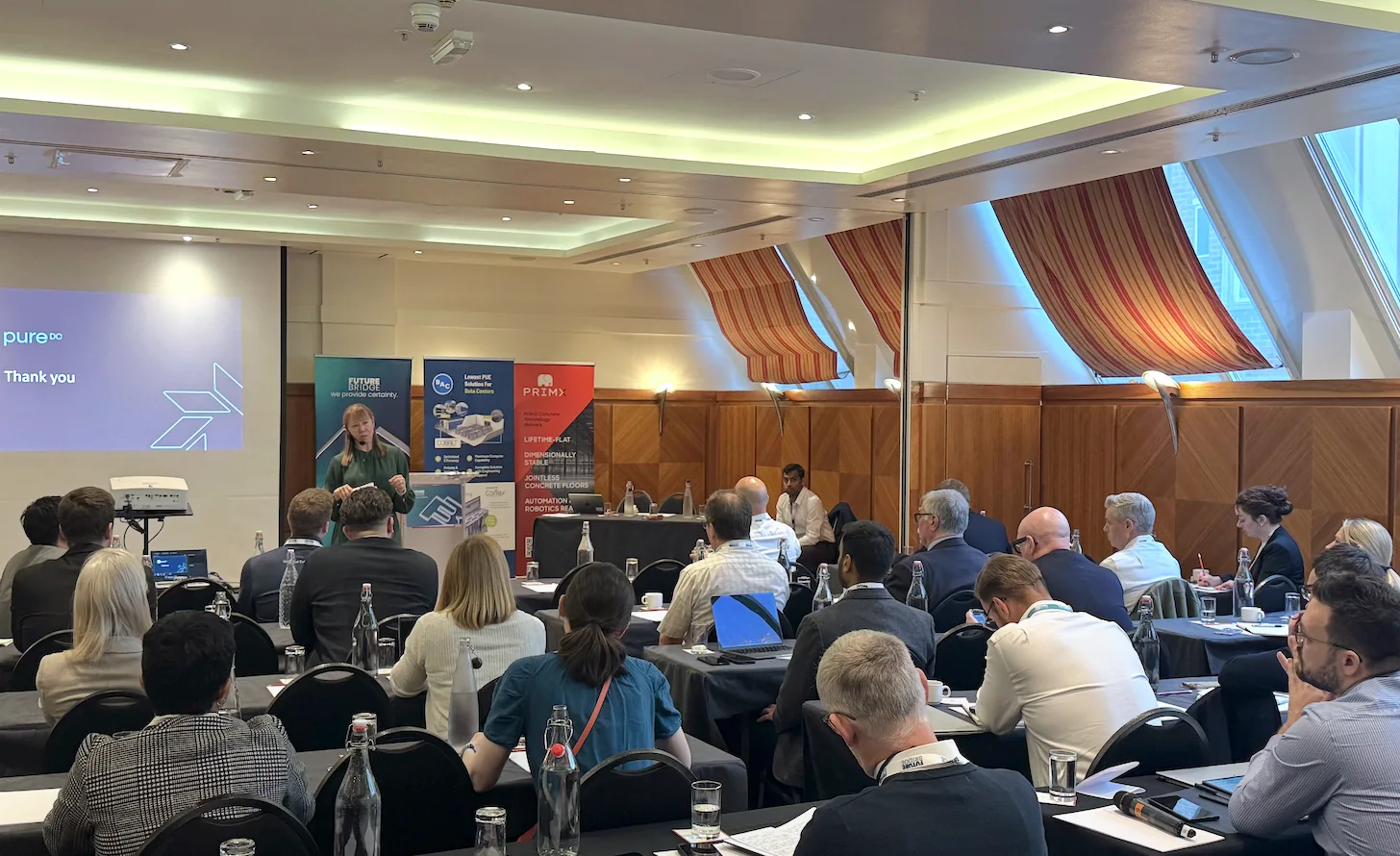
AI, power demand and the data centre flexibility opportunity
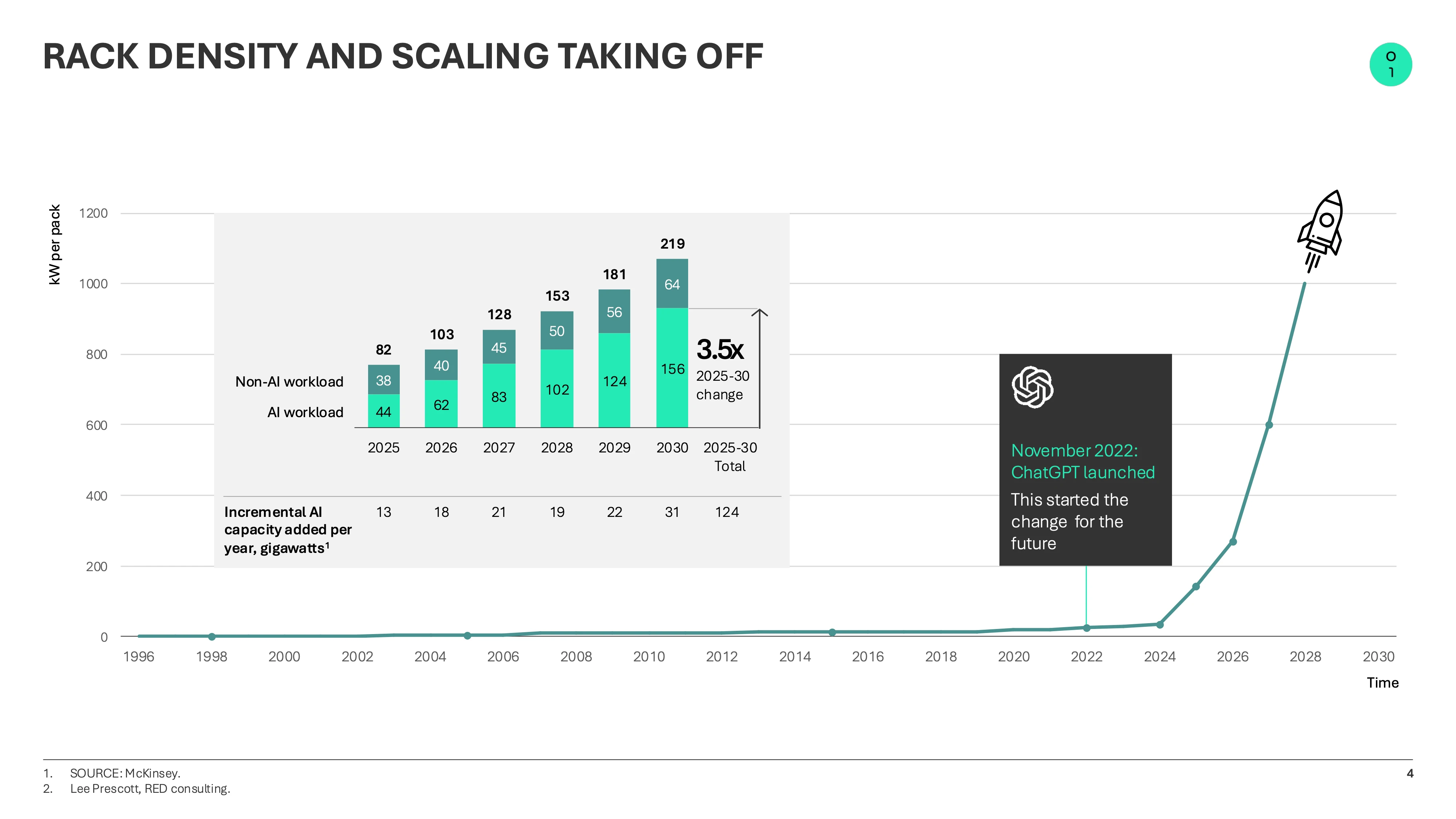
The opening keynote framed the central tension well. Electrification is central to reaching net zero, and AI sits on both sides of that equation at once.
AI is both part of the problem, but importantly part of the solution.
– Opening keynote, Dame Childs
The number that impressed me came from a Duke University study the keynote cited: if data centres curtailed consumption for just a quarter of one per cent of the time, the grid could absorb roughly 76 gigawatts of new demand. Set it against the £1 billion-plus the UK paid last year in constraint costs, shutting off renewables and firing up gas, and flexibility stops being abstract – it becomes money on the table.
Grid flexibility is becoming the price of a connection
Flexibility is no longer something you bolt on later. In parts of Europe it's becoming a prerequisite for getting connected at all.
We will not be allowed to get these gigawatts of capacity if we don't have flexibility in mind.
– Data centre flexibility session
Two things make that more opportunity than burden for data centre operators:
- Price volatility can pay. Variable renewables push wholesale prices negative more often. Operators who partner with battery storage can earn from that volatility through demand response and arbitrage rather than just absorbing it.
- Waste heat is barely tapped. Only about 1.8% of the energy used in European data centres is recaptured as heat today. Across 14 Finnish sites the average is around 45%.
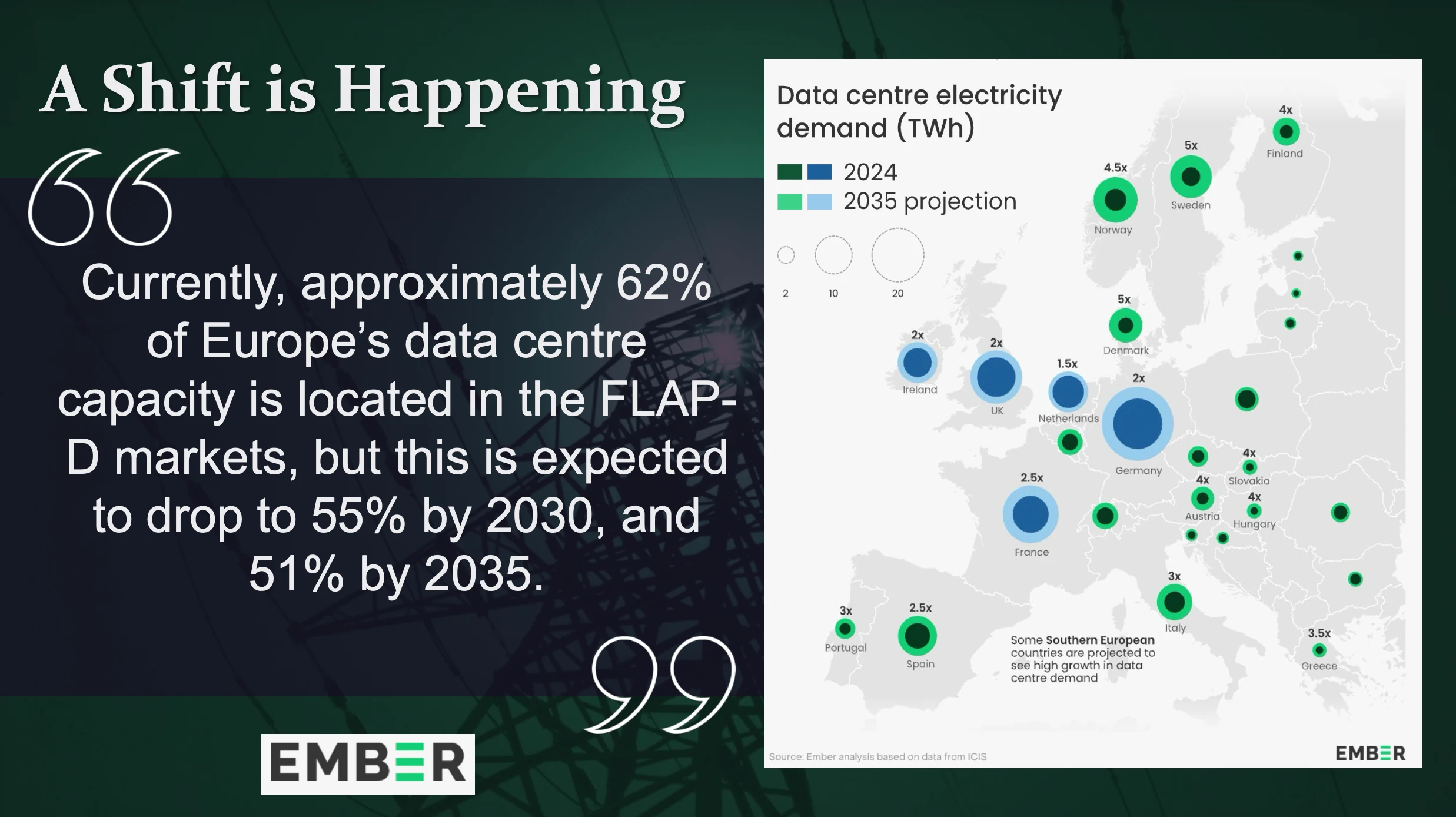
The warning signal underneath it all: 11 US states already have data centre moratorium proposals on the table, and more than one speaker expected that mood to reach Europe if the industry doesn't get ahead of it.
Renewable energy procurement for data centres
The current procurement trends and the annual-to-hourly transition were the threads I was most interested in. This came up in two separate sessions without any prompting from the procurement crowd.
In a planning discussion about what a low-carbon AI data centre needs by 2030, one contributor was blunt about certificates:
“It isn’t sufficient to only go towards the certificate way and do the yearly matching as it currently is. Actually going into time matching and PPAs, physically sourcing the renewable energy is important.” – Low-carbon planning session
In a later session on procurement, operators compared notes on how far they’d actually got. One described matching roughly 80% of a single US site’s load on an hourly basis for several years, working with a specialist provider, a level that’s also been reported publicly. Others were earlier on and candid about it.
What was new was the trigger: several people said the prospect of the GHG Protocol’s proposed Scope 2 changes, still working their way through consultation, was finally moving procurement decisions that had stalled. I’d be careful reading a market-wide shift into a few rooms, but the direction was hard to miss.
The honest blocker everyone named was data. Utilities often don’t have the bandwidth to report hourly, and access varies a lot by country. You can’t match what you can’t measure, and that measurement layer is where most of the real work sits before any clever procurement starts.
This is the part I’d gently push on. Moving from annual to hourly isn’t a switch you flip, and it doesn’t have to be all-or-nothing. For most operators the realistic near-term step may be from annual to monthly alignment, which is achievable with the energy attribute certificates (EACs) and contracts that already exist, and produces a far more defensible claim. Hourly is the architecture you want underneath that, ready for when the standards and your data catch up.
Scope 2 looks more finished than it is
An embodied-carbon panel made a strong case that the next frontier is Scope 3. The logic: you can cut Scope 2 emissions sharply through green PPAs and low-carbon refrigerants, so attention should move to the embodied carbon in concrete, steel and equipment, which you only get one chance to get right.
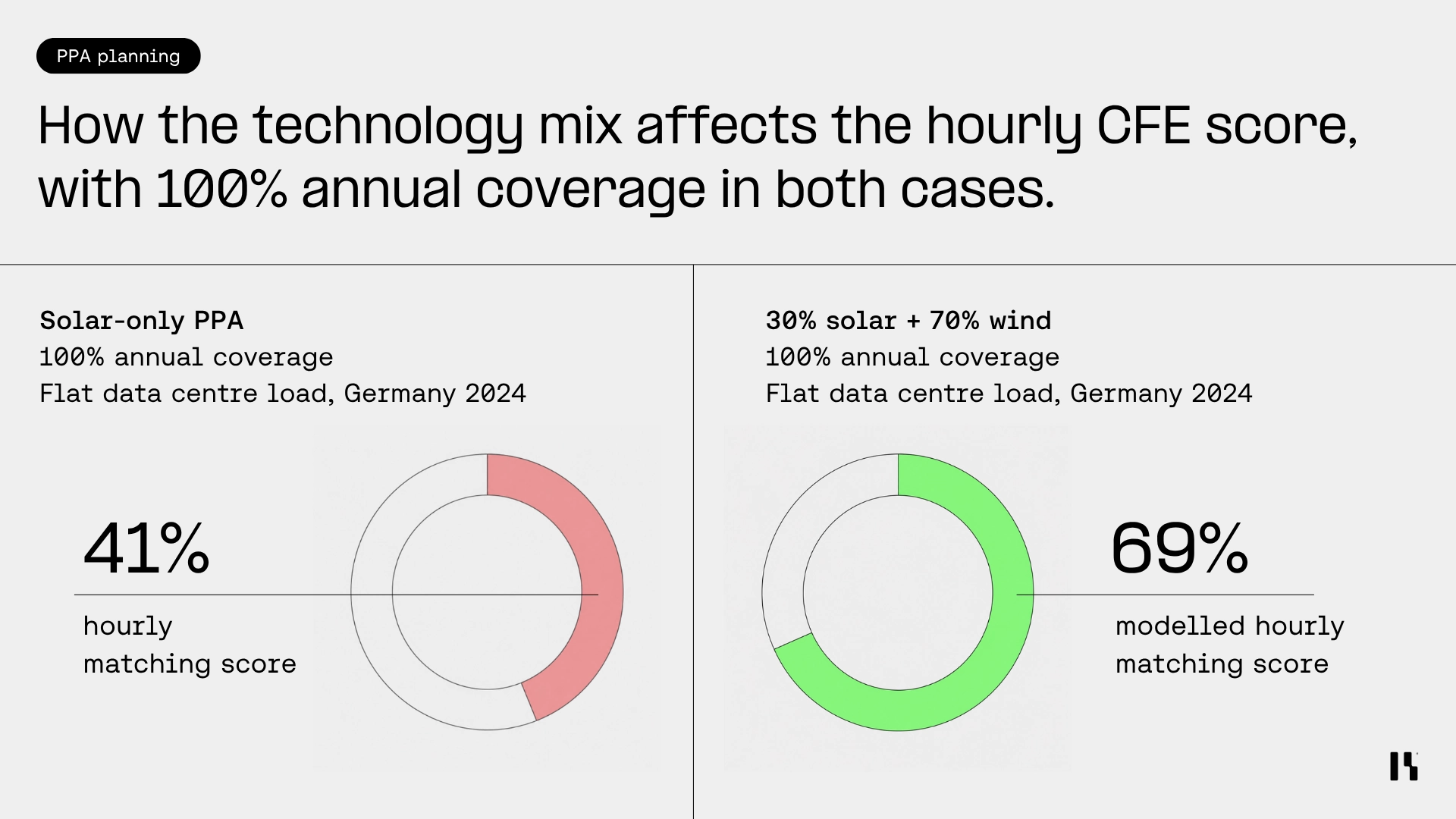
I agreed with most of it, with one caveat I couldn’t resist raising. A 90% renewable annual coverage figure can sit on top of a much lower hourly one. A portfolio that looks 100% renewable across a year can match closer to 40% of its actual hours if it leans heavily on solar, and higher with a better technology mix. So Scope 2 is less closed than a clean headline suggests. The same point surfaced in the AI-planning session, where a speaker argued that annualised PPAs and offsetting are no longer enough for a serious commitment, and that 24/7 carbon-free energy is where credible reporting is heading.
Tackling Scope 3 is the right call. The point is not to declare Scope 2 finished on the strength of an annual number.
Credible claims now have to be evidenced
The most bracing session was the one where a speaker refused to oversell. Their point was that even on renewables, a data centre is a long way from zero-impact once you account for everything behind it.
“As an industry, we’re not sustainable. Don’t talk about carbon-free energy and then ignore that. Be honest about it.”
– AI and energy planning session
With greenwashing rules tightening, you can no longer call a site ‘climate neutral’ without science-based evidence behind it. The flip side was just as clear: the sector is bad at telling its own good stories, the district heating, the community heat reuse, the apprenticeship schemes, much improved water stewardship. One line I scribbled down and underlined: ‘Start somewhere. Do good and talk about it. It doesn’t have to be 100 per cent perfect.’ For an industry under real public pressure, that was the healthiest thing said across the two days.
What I took away
The operators making real progress weren’t necessarily the ones with the boldest targets. They were the ones getting specific about the hours they covered and what their claims could evidence when someone checked. Honest reporting and timed, real-load energy kept coming up as the practical way through a hard problem.
That’s a good place for the conversation to be. And it’s a good place for us to be useful.
How we help data centres buy and manage renewables
Renewabl is an expert-led platform for energy data management and procurement, one place to replace the stack of separate tools most teams stitch together today. For data centre operators, that covers more than hourly matching:
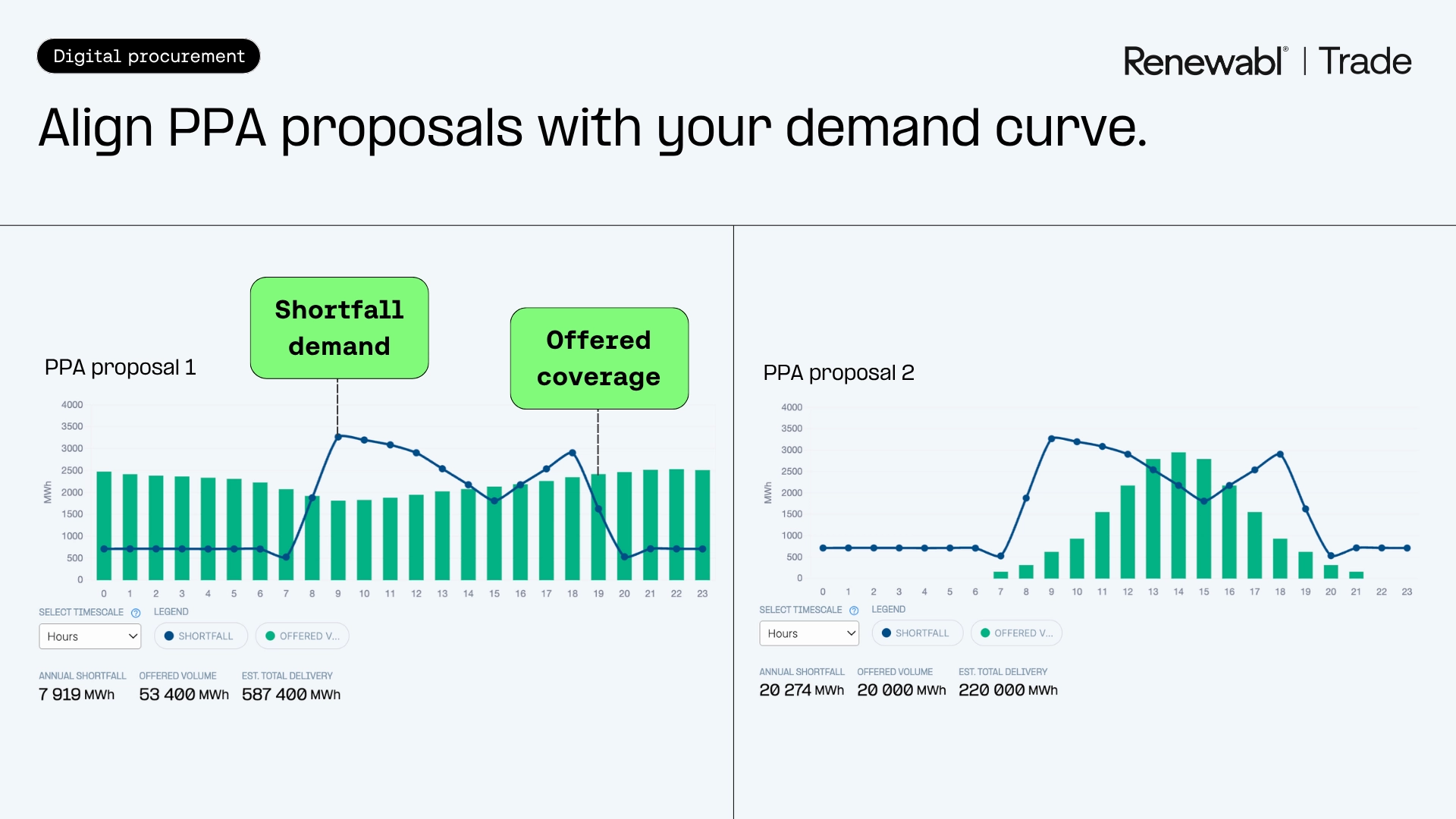
- Run competitive PPA and EAC tenders. Digital tenders across 120-plus suppliers, with intervals from annual to hourly, so you procure against your real load rather than a round annual volume.
- Analyse the PPAs you already have. We assess how existing contracts perform against your actual consumption profile, so you can see where the hedge holds and where it leaks.
- Manage your energy data and reporting. Consumption aggregation, multi-site certificate reconciliation, and CFE and emissionality reporting at hourly, monthly or annual resolution, the layer this summit kept naming as the real blocker.
- Future-proof without changing anything now. Hourly matching is built into the platform from day one, switched on when your data and the standards are ready. You don’t have to commit to it today to be ready for it.
If you want a sense of where you stand, our free CFE score estimator gives you a baseline hourly carbon-free energy score in a few minutes. There’s more on what we do for the sector on our data centre services page.